

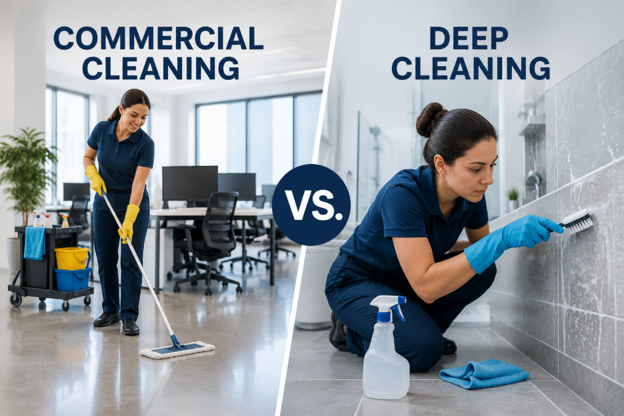
A clean and well-maintained environment does more than create a positive impression; it directly impacts health, safety, productivity, and overall comfort.
Whether you manage an office, retail store, healthcare facility, educational institution, or industrial workspace, maintaining cleanliness is essential for daily operations. However, when it comes to professional cleaning services, you may often come across two commonly used terms: commercial cleaning and deep cleaning.
At first glance, these services may seem similar because both focus on creating cleaner and healthier spaces. However, they serve different purposes and are designed to address different cleaning needs.
Understanding the distinction between the two can help you choose the right service for your facility, schedule maintenance more effectively, and ensure your environment remains in excellent condition throughout the year.
If you have ever wondered whether your business needs routine commercial cleaning, a deep cleaning service, or a combination of both, this guide will help you understand the key differences and determine which option is best suited for your specific requirements.
What Is Commercial Cleaning?
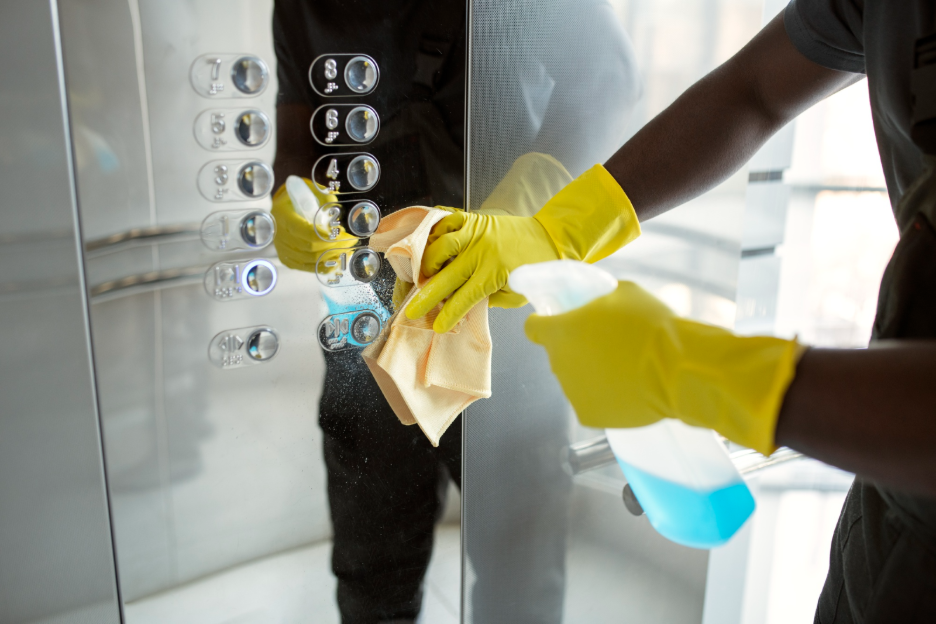
Commercial cleaning refers to routine cleaning services performed regularly to maintain the cleanliness and appearance of commercial properties. These services are designed to keep your facility clean, organized, and presentable on a day-to-day basis.
Commercial cleaning is typically scheduled daily, weekly, or at another recurring frequency depending on the needs of your business.
Common commercial cleaning tasks include:
- Vacuuming carpets and rugs
- Sweeping and mopping floors
- Dusting desks, furniture, and surfaces
- Emptying trash bins
- Cleaning restrooms
- Sanitizing high-touch surfaces
- Cleaning break rooms and kitchens
- Restocking hygiene supplies
The primary goal of commercial cleaning is to maintain a consistently clean environment and prevent dirt, dust, and clutter from accumulating over time.
What Is Deep Cleaning?
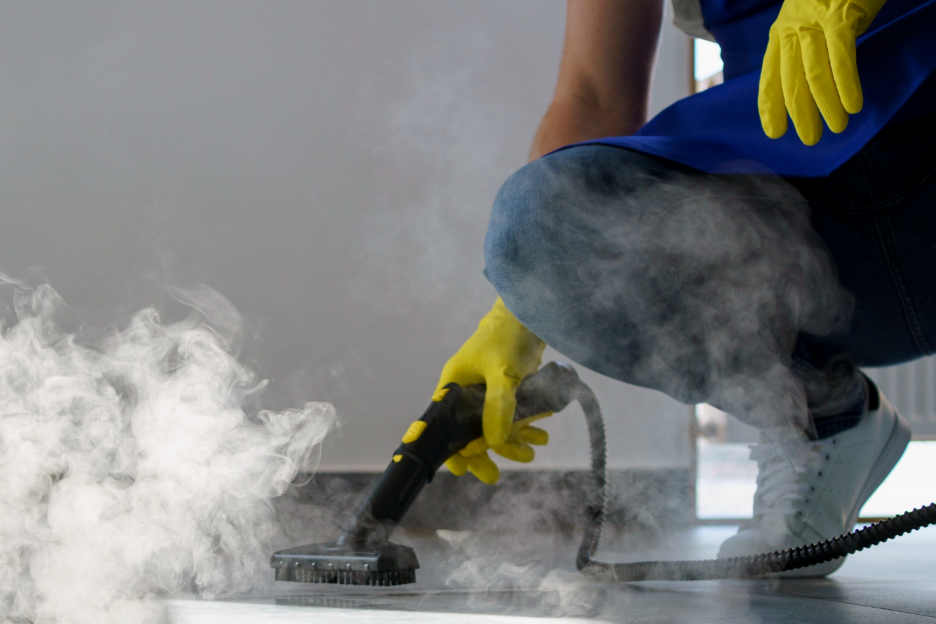
Deep cleaning is a more thorough and intensive cleaning process that targets areas often overlooked during routine cleaning. It goes beyond surface-level maintenance and focuses on removing built-up dirt, grime, bacteria, allergens, and contaminants from hard-to-reach spaces.
Unlike commercial cleaning, deep cleaning is not usually performed daily or weekly. Instead, it is conducted periodically to restore cleanliness and improve the overall condition of the facility.
Deep cleaning services may include:
- Detailed floor scrubbing and polishing
- Carpet deep extraction cleaning
- Cleaning behind and underneath furniture
- Sanitizing walls, doors, and baseboards
- Dust removal from vents and air ducts
- Deep restroom sanitation
- High-level dusting of ceilings and fixtures
- Window and glass detailing
- Removal of stubborn stains and buildup
The purpose of deep cleaning is to address hidden dirt and contamination that routine cleaning may not fully eliminate.
Key Differences Between Commercial Cleaning and Deep Cleaning
While both services contribute to a cleaner workplace, several important differences set them apart.
1. Frequency of Service
One of the most significant differences is how often the cleaning is performed.
Commercial cleaning is typically scheduled on a regular basis, such as daily, weekly, or multiple times per week. Its purpose is to maintain cleanliness consistently.
Deep cleaning, on the other hand, is performed less frequently. Many businesses schedule deep cleaning services quarterly, biannually, or annually depending on traffic levels and industry requirements.
2. Scope of Cleaning
Commercial cleaning focuses on visible and commonly used areas that require routine attention.
Deep cleaning covers a much broader scope. It targets hidden, neglected, and hard-to-reach areas where dirt and bacteria can accumulate over time.
For example, while routine cleaning may involve wiping desks and mopping floors, deep cleaning may include moving furniture, scrubbing grout lines, and cleaning air vents.
3. Level of Detail
Commercial cleaning is designed to maintain appearances and hygiene standards.
Deep cleaning involves a much higher level of detail and attention. Every surface is cleaned more thoroughly to remove embedded dirt, stains, and contaminants that routine cleaning cannot always address.
This intensive approach helps improve cleanliness, air quality, and overall workplace hygiene.
4. Time and Labor Requirements
Because commercial cleaning focuses on maintenance tasks, it generally requires less time and fewer resources.
Deep cleaning requires more labor, specialized equipment, and advanced cleaning techniques. As a result, it often takes longer to complete and may involve a larger cleaning team.
5. Cost Considerations
Commercial cleaning services are generally more affordable on a recurring basis because they involve routine maintenance tasks.
Deep cleaning services may have a higher upfront cost due to the extensive work involved. However, periodic deep cleaning can help protect assets, reduce long-term maintenance expenses, and extend the lifespan of flooring, furniture, and equipment.
When Should You Choose Commercial Cleaning?
Commercial cleaning is ideal when your goal is to maintain a clean, professional, and healthy environment on an ongoing basis.
You should consider commercial cleaning if:
- Your facility experiences regular daily traffic
- You want to maintain a professional appearance
- You need consistent sanitation and hygiene
- You want to reduce dust and clutter accumulation
- You require routine restroom and common area maintenance
Regular commercial cleaning helps ensure that your workplace remains welcoming and functional for employees, customers, and visitors.
When Should You Choose Deep Cleaning?
Deep cleaning is the right choice when your facility requires a more intensive level of cleaning.
You may benefit from deep cleaning if:
- Your business has not been professionally cleaned for an extended period
- You are preparing for inspections or audits
- You are moving into a new facility
- You have completed construction or renovation work
- Seasonal cleaning is required
- High-traffic areas show signs of dirt buildup
- You want to improve indoor air quality
Deep cleaning helps restore your space to a higher standard of cleanliness and addresses areas that routine cleaning may miss.
Benefits of Combining Commercial and Deep Cleaning
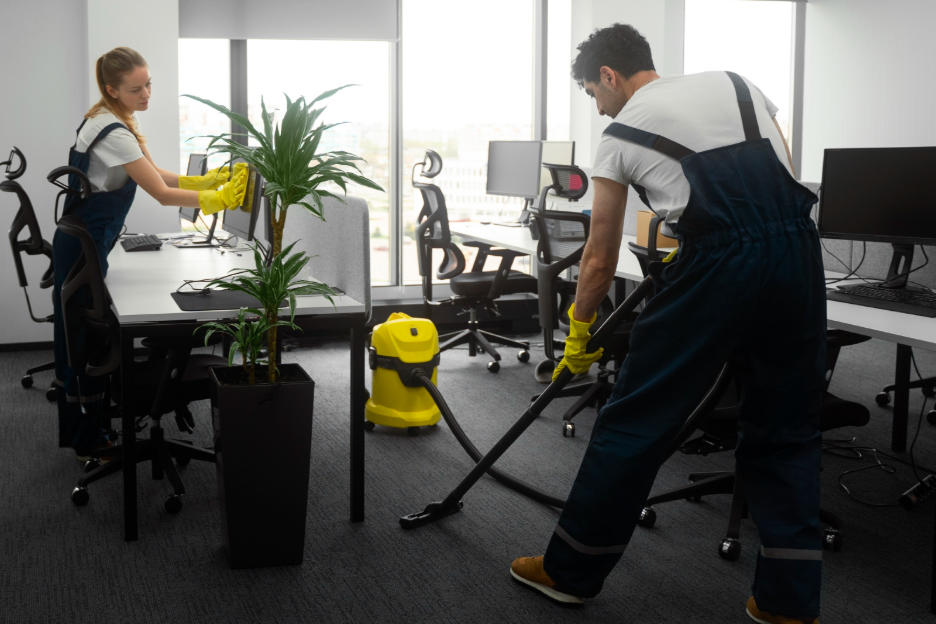
When you invest in both cleaning services, you can experience several advantages:
- Healthier indoor environments
- Reduced spread of germs and bacteria
- Improved employee productivity
- Enhanced customer impressions
- Better air quality
- Extended lifespan of facility assets
- Compliance with cleanliness standards
- Lower long-term maintenance costs
By addressing both daily maintenance and deeper sanitation needs, you create a cleaner and more efficient workplace.
Conclusion
Understanding the difference between commercial cleaning and deep cleaning allows you to make informed decisions about maintaining your facility.
While commercial cleaning focuses on routine upkeep and daily cleanliness, deep cleaning provides a more detailed and intensive approach that targets hidden dirt, grime, and contaminants.
If you want your business to maintain a professional appearance, support employee well-being, and create a healthier environment, both services play an important role.
By combining regular commercial cleaning with periodic deep cleaning, you can ensure your facility remains clean, safe, and welcoming while protecting your investment for years to come.